Herd on the Rise: Abundance of Deer in Michigan Prompt New Rules
By Teresa Miller
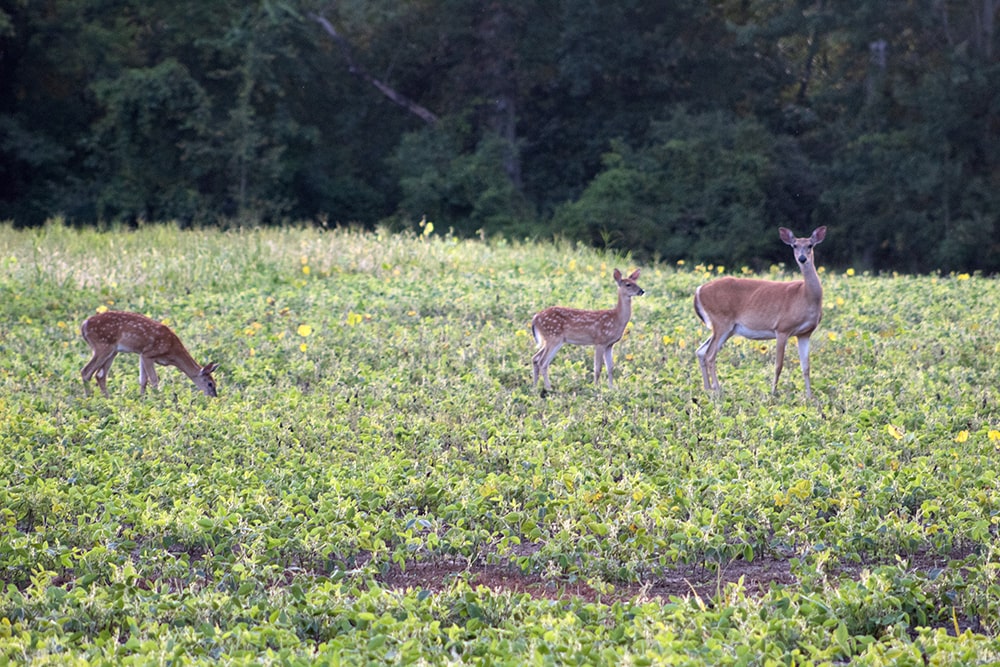
Across Michigan’s Lower Peninsula, deer numbers are widely acknowledged to be too high. The Michigan Department of Natural Resources (DNR) estimates the statewide deer population at roughly two million animals. While recent county-level figures are no longer published, the southern Lower Peninsula, including Eaton County, remains one of the most densely populated regions for deer in the state.
Several factors have contributed to this growth. Milder winters mean fewer losses to harsh weather. Suburban expansion has created edge habitat with plenty of food and cover. Predator numbers are low in most regions. But, perhaps the most significant factor is that the number of active hunters continues to decline, weakening one of the key management tools used to keep the herd in check.
WHY IT MATTERS
An overabundance of deer can have wide-ranging consequences for both people and the environment. On the ecological side, too many deer can damage forest understories and young tree growth, making it harder for native plants to regenerate. In agricultural areas, high deer populations can cause costly crop damage, destroy fences, and create daily frustrations for farmers and landowners.
The issue also extends to roadways. Michigan consistently ranks among the top states for deer-vehicle collisions, with more than 58,000 reported crashes in 2023 alone. Those accidents resulted in 1,725 injuries and 19 deaths. The cost of vehicle repairs, insurance claims, and hospital bills quickly adds up creating a burden that extends far beyond the rural landscape.
Declining hunter participation adds another layer to the challenge. In the early 2000s, Michigan had more than 800,000 deer hunters. Today, that number is closer to 525,000. Fewer hunters mean fewer deer harvested each year. Without that population control, herds can quickly outgrow available habitat, which increases impacts on both people and the environment.
DISEASE CONCERNS IN A CROWDED HERD
As deer numbers climb, so does the risk of disease. Overpopulation leads to closer contact among animals, making it easier for illnesses to spread. Epizootic hemorrhagic disease (EHD) has caused periodic die-offs in parts of Michigan, especially during warm, dry summers when biting midges are active, and chronic wasting disease (CWD) has been detected in Eaton County.
While these diseases don’t pose a direct threat to humans, they highlight the importance of active herd management. Active management and testing help slow the spread and keep local herds healthier over time.
HOW THE RULES ARE CHANGING
Recognizing these pressures, the DNR has made several adjustments to its deer management strategy. Hunters are being encouraged to harvest more antlerless deer to help bring herd numbers back into balance. Landowners who experience damage to crops or landscaping can apply for special Deer Damage Shooting Permits to remove deer outside of regular hunting seasons.
For the 2025-2026 season, now underway, the DNR extended opportunities to hunt. Adjustments include expanded late antlerless firearm seasons, additional archery opportunities, and more flexibility during the muzzleloader season in certain areas. These changes are designed to give hunters more chances to participate while helping reduce the statewide deer population to healthier levels.
Mandatory harvest reporting, which requires hunters to log their deer within 72 hours of harvest, remains in place. The data collected from those reports will help the DNR better understand regional herd trends and measure the success of management efforts in real time.
ENCOURAGING THE NEXT GENERATION OF HUNTERS
Michigan’s deer herd has grown beyond what current hunter participation can manage. Hunting remains the most effective way to reduce deer numbers while supporting conservation through license revenue. Encouraging more people to participate, especially youth and those returning to the sport, is essential. Local clubs, landowners, and outdoor organizations can help by offering mentorship, access, and education that make hunting more approachable. Every successful harvest plays a part in reducing crop damage, curbing collisions, and restoring healthier habitat.
LOOKING AHEAD
Eaton County illustrates the larger story across Michigan: rising deer numbers, changing regulations, and growing concern about safety and land use. The new rules are an important step, but lasting progress will take participation from every corner of the community. Hunters, farmers, residents, and local officials all have a stake in managing an overpopulated herd. The challenge is not simply about reducing numbers but maintaining balance for healthy deer, safer roads, productive farms, and active hunting seasons.
Michigan consistently ranks among the top states for deer-vehicle collisions, with more than 58,000 reported crashes in 2023 alone.
MICHIGAN DEER HUNTING SEASONS
2025-2026 SEASONS
Liberty Hunt (Youth & Hunters with Disabilities):
September 13-14, 2025
Early Antlerless Firearm (Lower Peninsula):
September 20-21, 2025
Independence Hunt (Hunters with Disabilities):
October 16-19, 2025
Archery Season:
October 1-November 14, 2025, and December 1, 2025-January 1, 2026
Regular Firearm Season:
November 15-30, 2025
Muzzleloader Season:
December 5-14, 2025
Late Antlerless Firearm Season:
December 15, 2025-January 1, 2026
Extended Late Antlerless Firearm (select counties):
January 2-11, 2026
2026-2027 SEASONS
The Michigan DNR has not yet released confirmed dates for the fall 2026 deer seasons, but they are typically scheduled around the same mid-September to mid-January pattern. Updated information will be available on the DNR website in summer 2026 at michigan.gov/dnr.