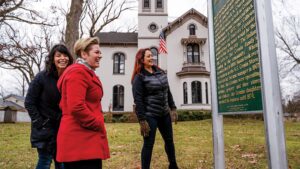
THE MARSHALL HISTORIC HOME TOUR CELEBRATES HISTORY AND HERITAGE
By Jenny Black
By Jenny Black
On September 9th and 10th, Marshall will host its 58th annual Historic Home Tour. This iconic event is the longest-running home tour in the Midwest. For two days, the tour gives visitors the opportunity to explore a selection of historically preserved and beautifully renovated homes in and around Marshall.
Tour tickets also allow visitors access to historical museums in Marshall, where they can learn about the people and developments that shaped this area. In addition, downtown Marshall offers unique shops, delicious restaurants, and other community festivities, making this a weekend full of small town Midwest charm.
The sustained popularity of the Marshall Historic Home Tour is a testament to its positive impact on both visitors and residents. When you take part in a historic home tour, you are given the opportunity to enter a gateway into another time and place. You are allowed to experience history in a personal way, engaging the senses and stimulating the mind. Experiencing a historic in-person tour touches you in a way that books and pictures cannot, creating memories that linger long after the tour has ended.
Historic homes and buildings are not only aesthetically pleasing to look at, they also remind us of where we came from and serve as symbols of a community’s heritage and identity, bringing us back to our roots. Learning about history reminds us that we are part of a bigger picture than our narrow daily tasks and it allows us a chance to slow down and listen to some very interesting stories.
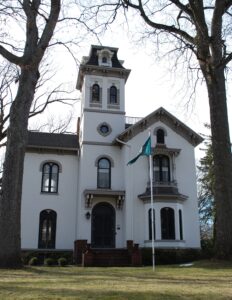
That’s why so many people enjoy Marshall’s Historic Home Tour. Each home on the tour has a unique story, which the tour guides are happy to elaborate on throughout the two days. The various historical museums tell their own stories as well. Did you know Marshall was an important stop along the Underground Railroad? Or that the Honolulu House is one of the most unusual pieces of architecture in the country? The details about these stories and many more are available during the tour, along with a chance to look around inside stunning homes and buildings.
According to Kimber Thompson, Director of Tourism and Vice President of the Marshall Historical Society, the Marshall Historic Home Tour draws over a thousand visitors every year, with the number nearing 10,000 some years. And while there are many first-time visitors every year, there are also regulars who come to the tour year after year.
“There are people who love to come every year, some who plan their vacations around the tour,” Thompson said. “We know people who have chosen to retire in Marshall, after getting to know the community through the home tour. They experienced first-hand how quaint Marshall is, and now they are retired here, living their dream.”
The charming city of Marshall is rich in history. Once a major stagecoach stop on the route between Detroit and Chicago and then the switching station for the Michigan Central Railroad, the city was a bustling transportation hub with aspirations of becoming the state capital. When the importance of the railroad faded and Lansing won the bid as state capital by one vote in 1847, the patent medicine industry rose in economic importance until 1906.
Not only were many fine homes built in Marshall in the 19th and early 20th century, but a good number of them have been preserved and kept in beautiful condition. Some of the most common architectural styles you will find in Marshall are Queen Anne, Greek Revival, Gothic Revival, and Italianate.
In fact, the community takes its historical preservation so seriously that it is home to the nation’s largest National Historic Landmark Districts in the Small Urban category. Made up of over 800 properties, this area includes lovely homes, businesses, churches, museums, and other buildings. At a time when many American downtowns and small cities are declining, the small city of Marshall is thriving.
Pam Munsie is a longtime board member of the Marshall Historical Society. She has lived in Marshall for 45 years and is an important liaison between homeowners and the historical society. Munsie attributes the vitality of Marshall and the success of the Marshall Historic Home Tour to the power of community.
“The Home Tour is successful because of the people in the community and community pride. We are proud of our town and we want to share it,” Munsie said. “There are so many volunteers involved in the tour and we work on it year-round.”
Munsie has noticed that although young people often leave Marshall to go to college and start jobs after graduation, many of them end up returning.
“They come back when they are ready to raise a family because they know it’s a wonderful place to grow up,” Munsie said.
The momentum for historical preservation can be traced back to Marshall resident Harold C. Brooks, who lived from 1885 to 1978. Known for running the Brooks Rupture Appliance Company for much of his adult life, Brooks was also known as a civic leader, historian, and philanthropist.
During a time when some of Marshall’s most important historic homes and buildings were falling into disrepair and were at risk of being sold and neglected, Brooks bought them to protect their historical integrity and later donated them back to the city. He is known to have saved over a dozen Marshall buildings. He also donated the Brooks Memorial Fountain to the city as part of the 1930 Marshall Centennial Celebration. This stunning Greek Revival structure is located at the western entrance to downtown and is still enjoyed by residents and visitors.
The passion Harold Brooks showed for the historical preservation of Marshall is contagious and continues to inspire the citizens of Marshall. The impressive and consistent success of the Marshall Historic Home Tour is a validation of the work of Harold Brooks and the continued community support. Not only is the community invested in preserving their rich history, but they are also eager and proud to promote it through their museums, the Home Tour, and the annual Christmas Candlelight Walk.
“Harold Brooks was paramount to the preservation of Marshall,” Thompson said. “He got people in town interested in preservation and passionate about history. His dedication was contagious and everyone got onboard with it.”
The first Home Tour was in 1957, started by the Trinity Episcopal Church and led by Isabel and Jan Brooks. It included three remodeled homes and two new kitchens. One of those kitchens included in the first tour was in the home of Win and Jean Schuler, of Marshall’s well-known Schuler’s Restaurant & Pub. The early tours were held on weekday afternoons in May. After a few years the tour was switched to a Saturday in September, to accommodate working women and the growing number of visitors.
In 1968, the Marshall Historical Society took over the running of the tour which now consistently takes place on the weekend after Labor Day. What started as a small event has evolved into a significant one with hundreds of volunteers working to make it a success.
Some examples of the many volunteers involved include the tour guides who learn the history of the homes they are in charge of, the members of the cleaning committee who take care of the homes for the owners, and the Garden Club members who donate floral arrangements for the homes on the tour, just to name a few. In addition, the whole community gets involved for the weekend. The Marshall Singers perform, the local churches serve food and hold bazaars, and an art fair and vintage market take place downtown.
To keep things compelling, the Marshall Historic Home Tour is different every year, with a different crop of homes and a variety of themes. This year, the focus is going to be on some of the beautiful country farmhouses in and around Marshall.
“We are going to shake it up this year and do something we haven’t done before,” Munsie said. “Farming is an important part of our area’s history and people are really interested in it.”
Visitors will be able to not only tour the inside of farmhouses, but they will also be able to walk around and enjoy the landscape, scenery, and even some farm animals. The museums and some houses in town will be included in the tour as usual, as well as all the festive community events associated with the weekend.
If you are looking for an enjoyable weekend in a charming community, visit Marshall for the Home Tour, taking place on September 9th and 10th this year. Tickets for this event will be available late spring. For more information and updates, visit the Marshall Historical Society’s website at www.marshallhistoricalsociety.org.
The Haunted Side of Marshall
With such a rich history and so many historic buildings, there are bound to be some tales of ghosts in Marshall. Plus, the Gothic architecture lends itself to spooky imaginings. Below are some of the locations that are part of the ghost folklore of Marshall.
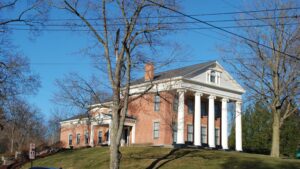
• The Governor’s Mansion, built in 1839 with elements of Greek Revival architecture, is now a museum run by the Daughters of the American Revolution. In 2019 an investigation by the Great Lakes Ghost Hunters of Michigan determined that the building was “active” with spirits. There are tours of this museum available specifically for ghost hunters.
• The Cronin House, another landmark known to ghost hunters, is at 407 N. Madison Street in downtown Marshall. This Italianate-style home was built in 1872 for merchant Jeremiah Cronin and his wife Susan. Approximately 100 years later, this house provided the inspiration for the 1973 teenage mystery novel The House with the Clock in Its Walls, written by Marshall native John Bellairs. The book was turned into a movie that was released in 2018.
• Skeleton Fest is an annual event in downtown Marshall run by Choose Marshall and takes place from the end of September through the end of October. A fun, family-friendly festival, it plays upon the haunted aspect of Marshall and displays skeletons throughout the downtown for visitors to view and photograph. The kick-off event features live music, face painting, and food.
• The American Museum of Magic is located in downtown Marshall and boasts the largest collection of magic open to the public. Since 1978, this museum has celebrated magicians and their stories about their magic. In 2016, the museum held a special Halloween Houdini seance in honor of the 90th anniversary of the magician’s death.
• Oakridge Cemetery, originally developed in 1839, is one of the oldest and historic operating cemeteries in Michigan. There are numerous stories of ghosts wandering around the cemetery at night.
• Marshall City Hall, located at 323 W Michigan Ave, is said to be haunted by an unknown diplomat. Known as “The Judge” to city employees, he is said to inhabit the upstairs of City Hall.
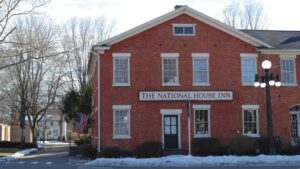
• The National House Inn is the oldest operating bed and breakfast inn in the state of Michigan and has welcomed guests for over 170 years. Though the owner has never had experience with any paranormal visions, ghost hunters believe a “lady in red” roams the halls.
• The Stagecoach Inn built in 1838, has gone through many changes over the years. Currently a popular downtown restaurant, there are stories of doors and cupboards opening on their own, among many other unexplained events.